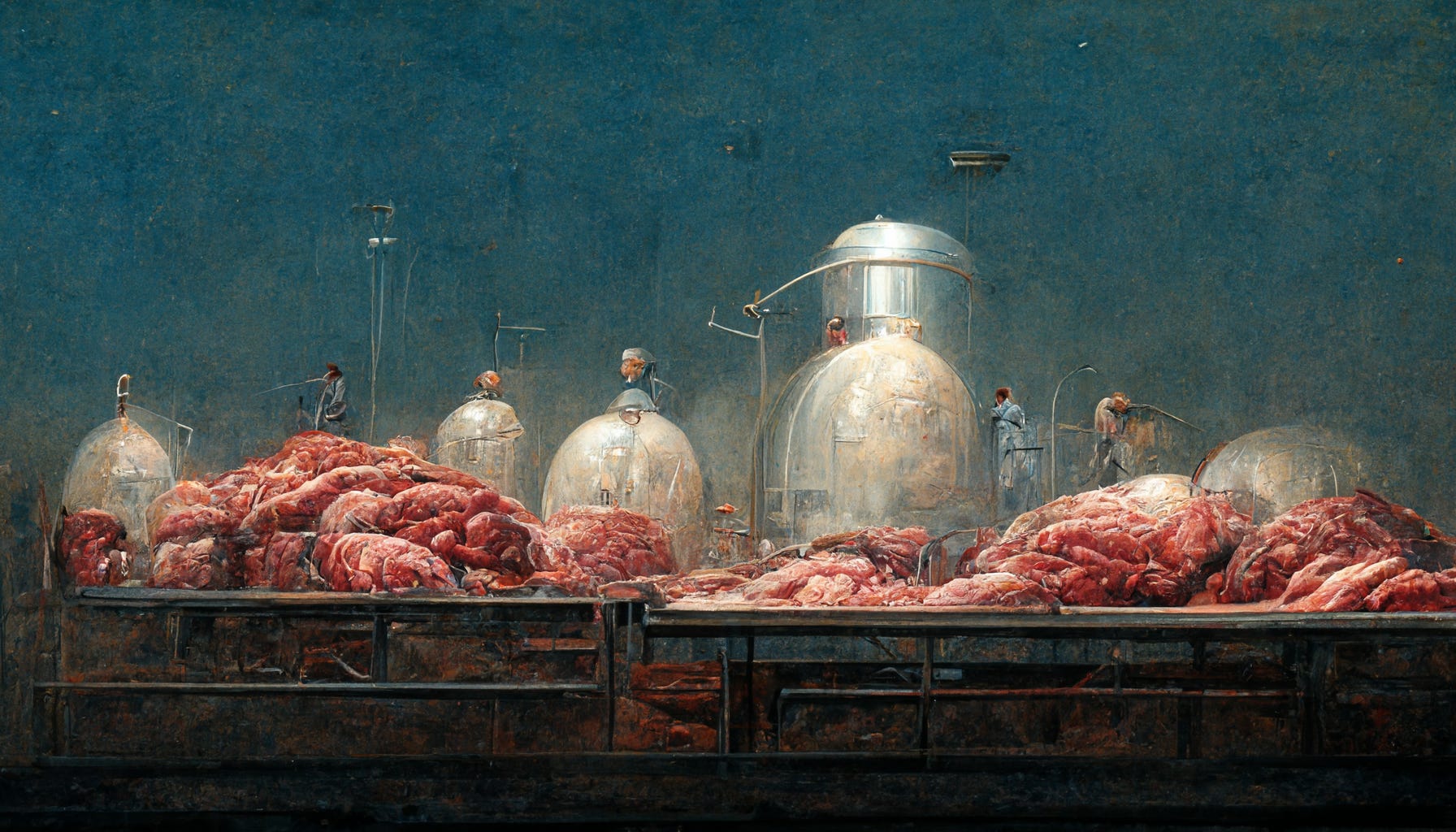
Thick kangaroo

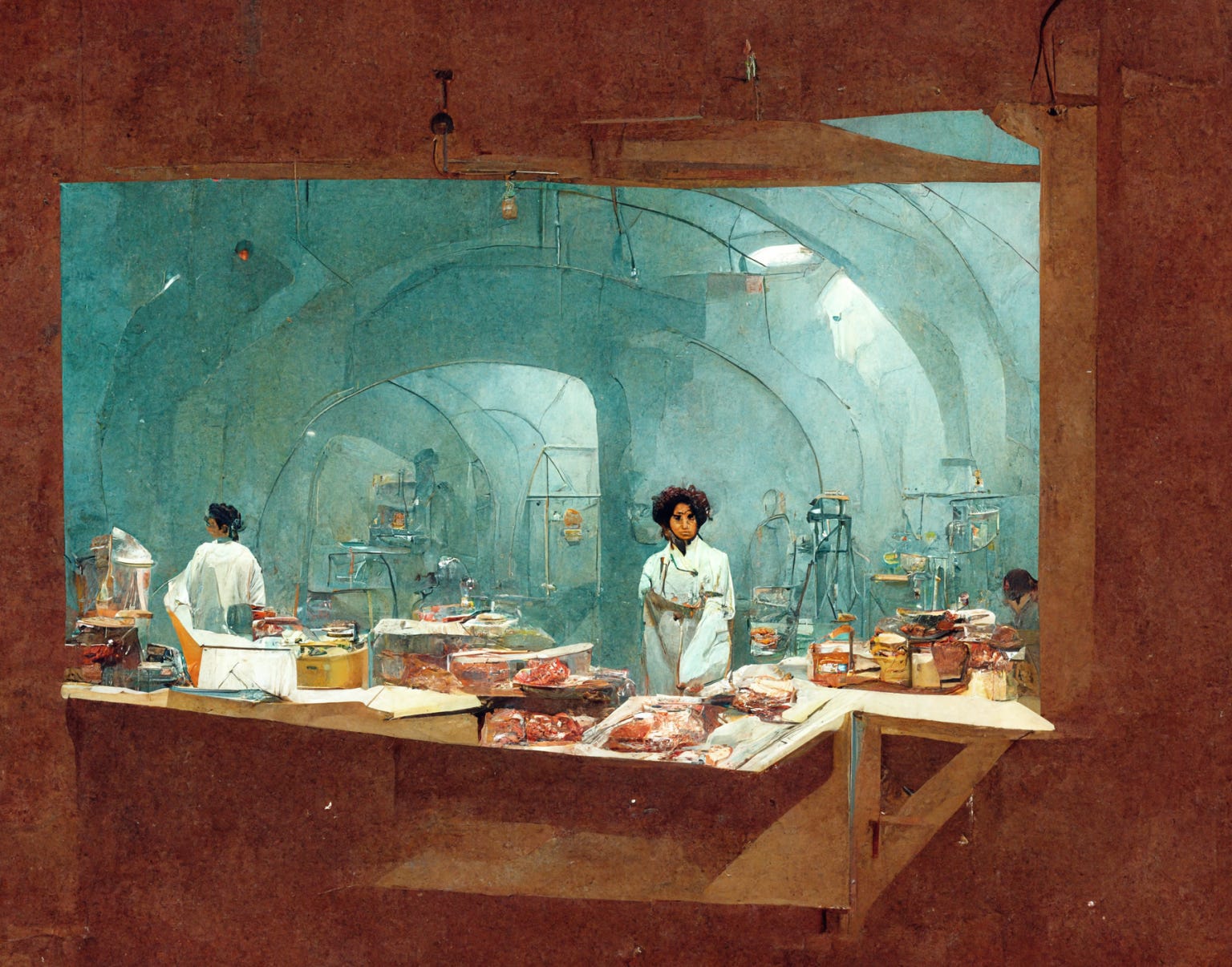
It’s table day. Most of us hate table day. Hours of kneading and squeezing and massaging wet, raw, unfinished flesh.
My right thumb working sinew and fat. Pushing back and forth with the grain. Deep on the down motion then gently pulling it back, bringing the blood up to the surface with each squeeze then letting it soak back in as I relax my wrist. Turn the meat over and repeat. The full weight of my torso helps to push the pads of my hands down to gently grind out and in, occasionally clawing and gently scraping as my hands move back into the starting position. I get the sense that we’re all getting tired and it’s not even lunch yet. This stuff is harder than usual. Like there’s more meat in the meat, somehow. Even breaking it up into more manageable and more recognisable cuts is hard work.
My sweat, stuck between fingers and powdered latex, mimics the moist seeping heme. The black gloves protecting the unfinished flesh from any bacteria on our hands that might contaminate; it doesn’t prevent the flesh from contaminating the mental image of what I’m doing. It really gets into your head: having your hands in a table full of unrefined flesh for a day. Some of us get into the zone, find it therapeutic. Being a vegetarian, I do not.
— when does this need to be ready? when are we dropping this
— can you hold this down so I can get another cut
— has she settled on marketing yet, do we need to align
— I need a break this is too much
— the drying room will need to be mostly cleared out in time
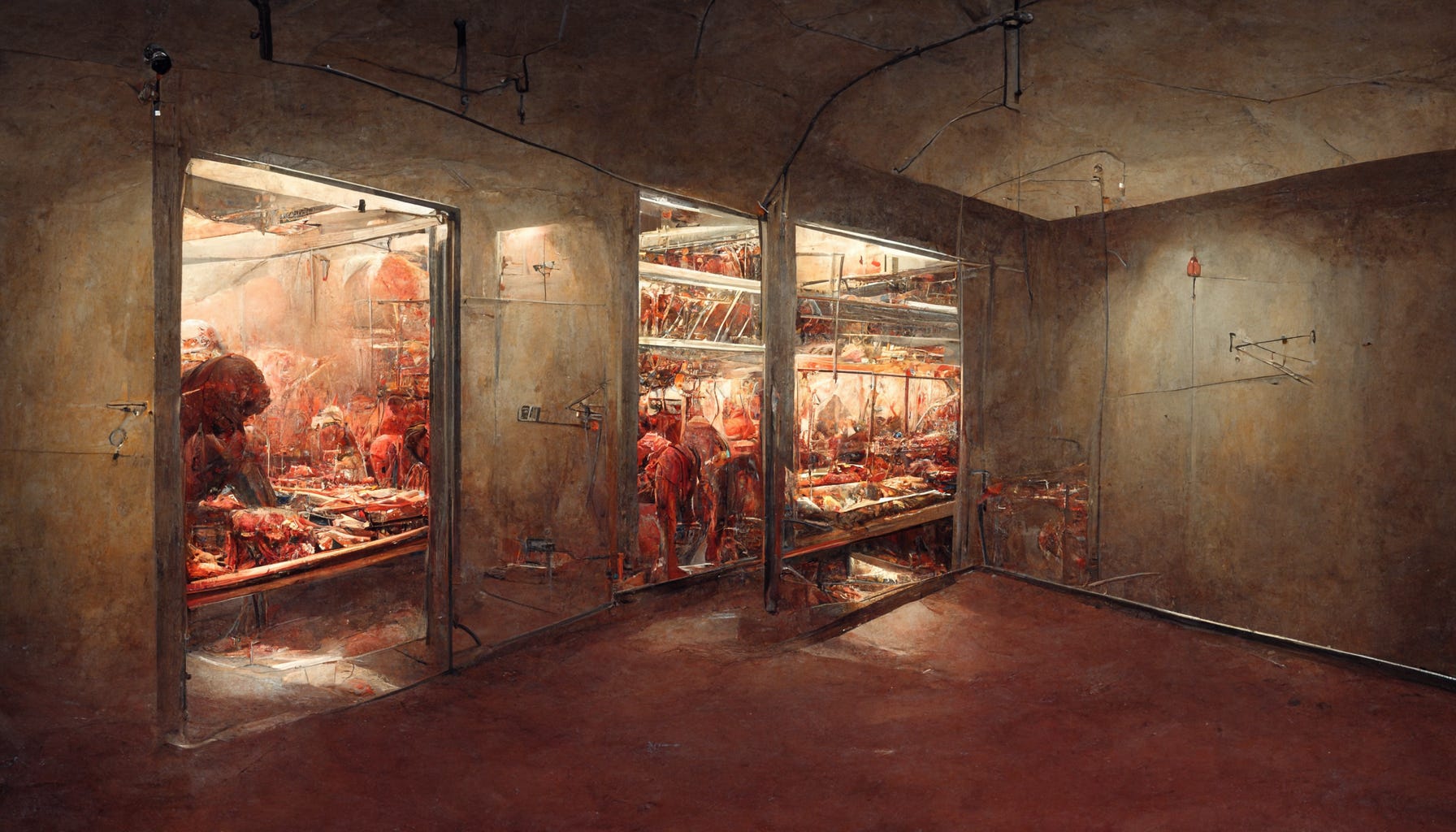
On top of having almost no footprint and removing a small amount of suffering from the food chain, all of our products need to have a high concept. Texture, flavour, or species are a good start. Ecosystems or biomes are my favourite themes. It’s how we sell out each batch before we release the drop. How we wean people off dirty meat and onto the clean stuff. Show them there’s a better way. As a women only startup/art collective we all bring different ideas and experiences but all have the same motivation to grow meat that is free from suffering and convince trad carnivores to make the change.
The stuff on the table that’s giving us all finger cramps is an exploration on the materiality of density. Part venison, part roo. Only rump and shanks, having isolated that code fairly recently. We’re even using negative bio-electric charges in the tank to dampen muscle growth and focus on density. The three month barrel age and 120 days air drying is mostly just a flex to help with marketing.
We’ve also made fluffy stuff before. Flushed the fermenters with positive charges so it puffs up really quickly. Really get the muscles to grow as fast as they can. Sold very well. A few restaurants - you’d know them - went wild with that.
The turducken was a bit of a cheap trick but gives us all a nice bonus around xmas time, helps pay for upgrades. Especially since we can grow it at scale. Easy to bond the different species together as they’re basically the same. We tried layering with opposites but they all fell apart on the massage table. Sea turtle with tiger sharks. A predator and prey hybrid. Such a dumb joke. Had to clean everything. We nearly lost our license over that one. Stunk for days.
— I still don’t get how getting into fermenting kombucha 20 years ago led me to this
— never bet against meat, that’s what dad always said
— fucking sauerkraut
— I still can’t talk to him about this
— fucking sauerkraut
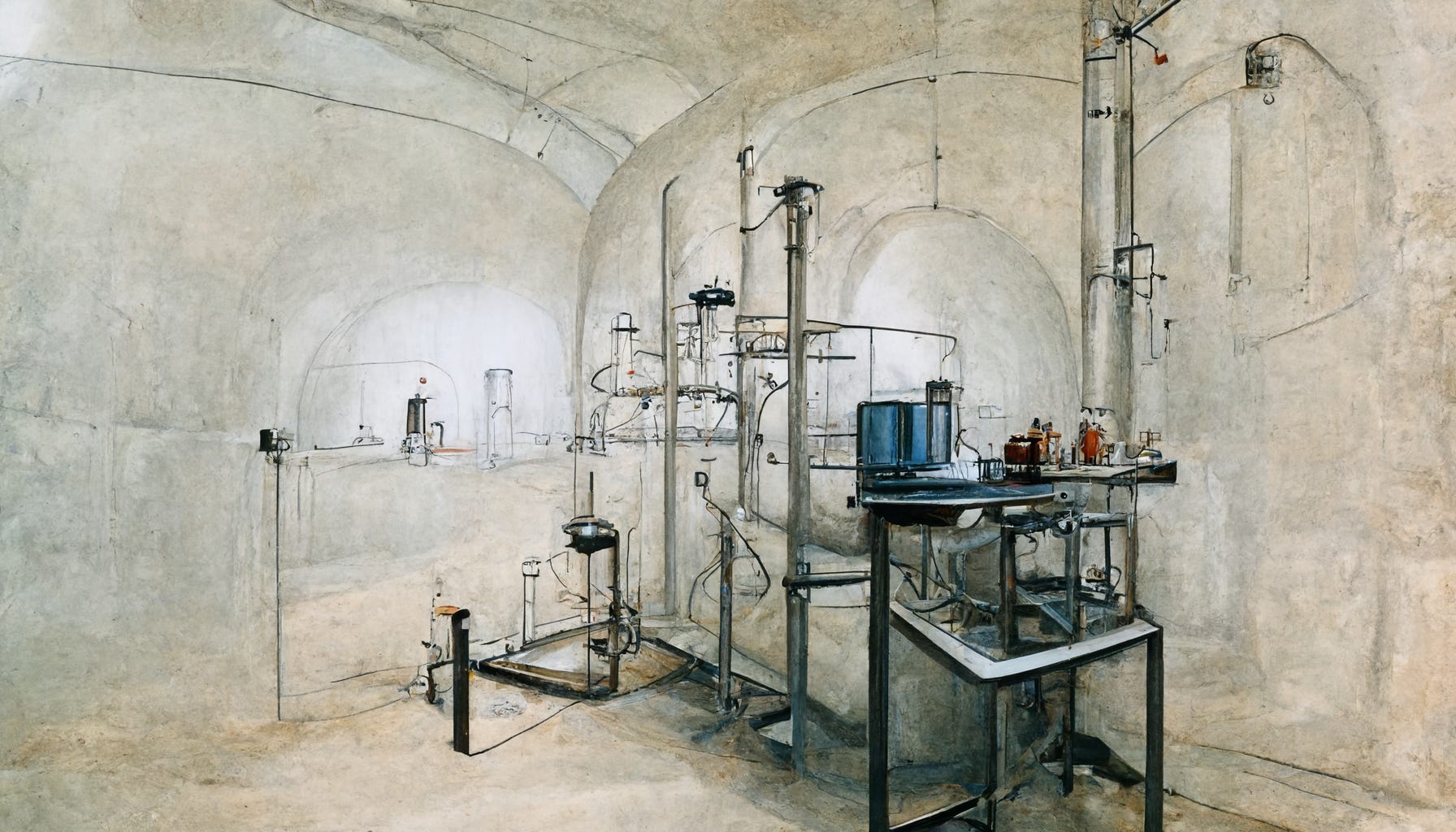
Our growth process is pretty standard. Wet mass is delivered and piped into the fermenters. Sugars are fed to the beige slurry. The month long growth stage. Scaffolding and nerves added midway through. Drain the nutrient bath at the tail end. Then we let it rest for a week or so.
It only gets weird when it’s time for twitching.
We open the base of the fermenter vats and the product slides out and slowly slips onto the floor. Wet slaps of flesh that had been squished up against each other the whole time, growing outwards from different scaffolds, finally freed by gravity. Nat yells “Tetsuo!” each time and giggles. I still don’t get the reference.
What makes meat meat isn’t just DNA or chemical makeup or muscle shapes. Lived experience is just as important for flavour. Their lifetime of moving around on their feet in the field or forest. Or factory farm.
So we need to condense years of walking, trotting, jumping or standing into just thirty days of almost non-stop contracting through targeted electrical pulses. Nerves are grown into the product, branching out from the scaffolding, just no pain receptors obviously. We launched four years ago and the sight of all that flesh, fresh from the vats, twitching and spasming for a month is my second least favourite part of the job.
— maybe we could try oscillating the charges next time
— layering? I get the joke but it’s not really helping the animals
— really dial up the unnatural
— this isn’t why most of us got in to this
— would only work if it’s grounded with something traditional like beef
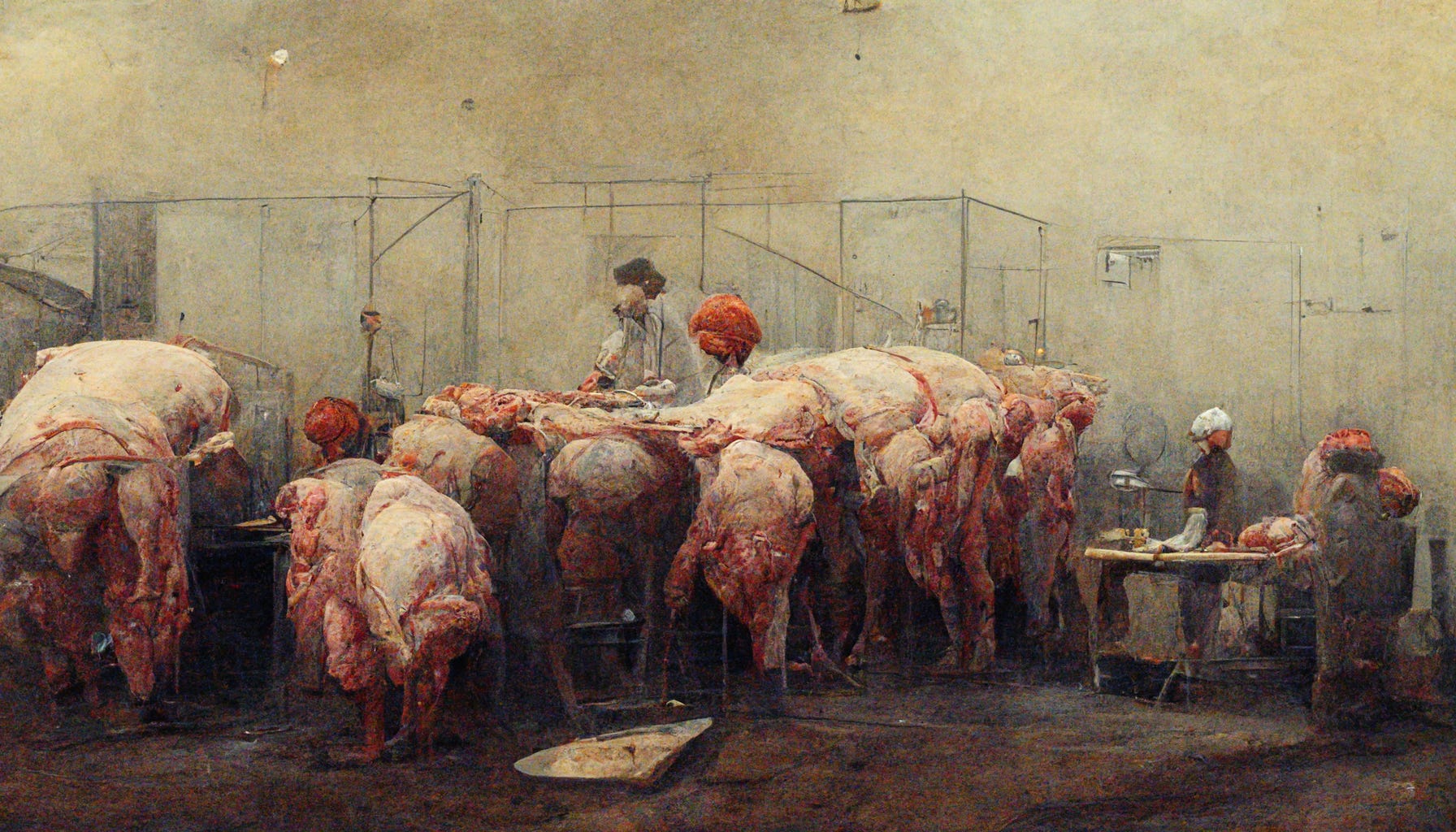
It’s where most of our electricity bill comes from. That and refrigeration. The panels on the roof cover most of it during the day, but we need to keep the contractions happening day and night, with only an hour break after each seven hour cycle. To spare us all the trauma the door usually stays closed and the lights off.
As off putting as that is, it’s nothing compared to the industrialised horrors that the remaining animals go through. That’s what keeps me here and most of my sisters going. Despite having our hands deep in artisanal shank this morning. To remove the sexual, reproductive, and economic exploitation animals are forced to endure. None of us are tricked by the bucolic imagery sold to us, when what really happens is conveniently hidden from us. We face up to what needs to be done to grow meat.
The female reproductive system, stolen from a few species, to be treated as an enabler of commodities. Millions of animals forced to give birth, only to have their young stolen from them to be slaughtered, and then forcibly inseminated again. Meat and milk and eggs is feminised protein. So we decided to feminise the protein another way: by growing it ourselves. Taking the husbandry out of the system. If capitalism treats animal bodies as units of productive value, we simply remove bodies from the system.
— ugh this piece is still twitching. I hate it when it does that
— why did I go out for drinks the night before table day
— subscriptions have flatlined lately
— my hands are so tired
— yeah let’s break for lunch I’m starving